


Sale
Sold out

Edible native plant
Amaryllidaceae
Edible native perennials
Prairie Onion – Allium stellatum
Product code : AKENE-0001
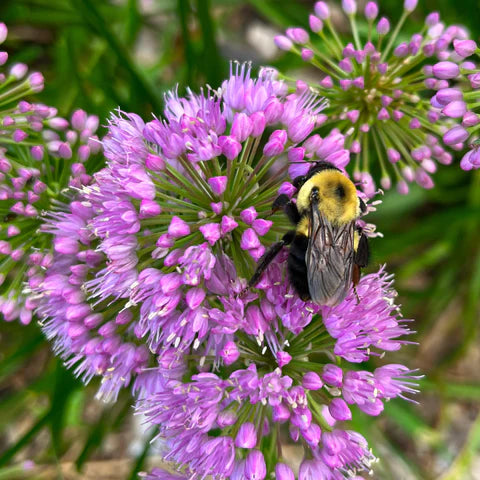
Prairie onion is an edible native perennial with pink-lavender umbels and blue-green foliage. Very hardy, low maintenance and suited to well-drained soil, it provides valuable nectar for pollinators in late summer.
- Quantity
- Approximately 100 seeds
- Exposure
- Full sun
- Life cycle
- Perennial
- Hardiness
- Zones 3 to 8
Discover the plant
Common namePrairie onion
FamilyAmaryllidaceae
GenusAllium
Speciesstellatum
Cultivar
TypeEdible native plant
Botanical nameAllium stellatum
Reproducible seedsYes
Prairie onion (Allium stellatum) is an edible native perennial that forms a compact clump of narrow, blue-green and gently arching leaves. In late summer, upright stems carry rounded umbels made up of numerous star-shaped pink to lavender flowers. This late bloom extends garden interest after many other perennials have finished flowering. The plant reaches approximately 35 cm in height and spreads 15 to 20 cm, making it easy to place along borders, in rock gardens or in containers. Hardy to Zone 3, it returns reliably each year when grown in well-drained soil and is well suited to cold Canadian garden conditions.
Prairie onion performs best in full sun and sandy to loamy soil that ranges from dry to moderately moist and drains freely. It tolerates poor soil and periods of drought once established. Seeds may be sown outdoors in fall or after approximately 60 days of cold stratification. Cover them with about 5 mm of growing medium and maintain light, even moisture until germination. A temperature near 20°C is suitable. In Canadian gardens, an open and sunny location supports abundant flowering and reduces the risk of bulb rot. A light application of compost in spring is generally sufficient to support healthy growth without encouraging excessive foliage.
In the garden, prairie onion suits rock gardens, flowering meadows, pollinator plantings and naturalistic landscapes. Its nectar-rich flowers attract native bees, bumblebees, butterflies and other beneficial insects in late summer. It combines well with lavender, sage, catmint, yarrow and native ornamental grasses. The leaves, bulbs and flowers are edible and offer a mild garlic-like flavour. They may be used sparingly in salads, soups and cooked dishes, while leaving enough foliage to maintain the plant’s vigour. Its compact size, late flowering season and low maintenance requirements also make it a useful choice for ecological gardens and small urban spaces.

Sowing guide
It all startswith a seed.
Sowing depth
5 mm
Spacing / density
15 to 20 cm (6 to 8 in)
Germination temperature
Approximately 20°C
Germination time
10 to 21 days after stratification
Sowing period
Fall or after 60 days of cold stratification
Propagation
Seeds or bulb division
Cold stratification
Yes
Growing method
Sow Star Garlic seeds in autumn or after approximately 60 days of cold stratification to improve germination. Cover the seeds lightly and keep the growing medium evenly moist until seedlings emerge. This species prefers full sun and well-drained soil. Once established, Star Garlic tolerates drought well and requires little maintenance. It slowly forms attractive colonies suited to naturalistic gardens and wildflower meadows. Its late-season flowering provides an important nectar source for pollinators. This hardy perennial is perfectly adapted to Canadian growing conditions.
Soil and care
The right care,at the right time.
Soil pH
6.0 to 7.5
Minimum temperature
Approximately -40°C
Care level
Low
Drought tolerance
Yes
Watering
Low; water only during extended drought
Soil type
Sandy to loamy, dry to moderately moist and well-drained
Fertilization
Light application of compost in spring
Moisture
Low to moderate; requires excellent drainage
Seasonal care
In spring, allow the foliage to emerge naturally and apply a thin layer of compost only when the soil is very poor. Avoid high-nitrogen fertilizers, which encourage foliage at the expense of flowers. During summer, water only through extended dry periods, since established bulbs tolerate dry soil well. Leave some faded flowers to form seed capsules, support wildlife and encourage natural reseeding. In fall, allow the leaves to yellow and dry completely before removing them because they replenish the bulb for the following season. Divide colonies that have become overcrowded in spring or fall and maintain excellent drainage throughout winter.
Container growing
A garden,within reach.
Recommended pot size
20 to 30 cm (8 to 12 in)
Star Garlic is very easy to grow in a deep, well-drained container. Use a light potting mix enriched with compost and place the pot in a very sunny location. This species tolerates drier conditions once established and needs little watering. Container growing also makes it easier to appreciate its late-season blooms, which are highly valued by pollinators. The bulbs can remain in the same pot for several years with minimal maintenance.

Bloom and dimensions
Its place,in your garden.
Mature height
Approximately 35 cm
Width / spread
Approximately 20 cm
Flower color
Pink to lavender
Foliage color
Blue-green
Foliage type
Deciduous
Growth rate
Moderate
Growth habit
Upright, compact and bulbous
Fragrance
Leaves and bulbs with a mild garlic scent
Bloom period
July to August
Fruiting
Capsules containing numerous black seeds
Days to maturity
Usually flowers from the second year
Harvest
Harvest leaves, flowers or bulbs sparingly during the growing season
Garden associations
In goodcompany.
Companion plants
Lavender, sage, catmint, yarrow and native grasses
Plants to avoid
Yellow flag iris, marsh marigold, cardinal flower and horsetail
Recipe idea
From the gardento your plate.
Edible parts
Leaves, flowers and bulbs
The leaves and bulbs have a mild garlic flavor and can be used fresh in salads, soups, and cooked dishes. The flowers are also edible and add a decorative touch to plates. Star Garlic is an excellent choice for edible gardens that support biodiversity. Harvest moderately to preserve the strength of the colonies.
Frequently asked questions
Your questions,answered.
When should prairie onion seeds be sown?
Star Garlic seeds are best sown in autumn or after approximately two months of cold stratification.
Is prairie onion edible?
Yes. The leaves, bulbs, and flowers are edible and have a delicate mild garlic flavor.
Does prairie onion attract pollinators?
Its late-season blooms attract a wide variety of bees, butterflies, and other beneficial insects.
Does prairie onion tolerate drought?
Once well established, Star Garlic tolerates dry periods relatively well thanks to its underground bulb.
Is prairie onion suitable for Canadian gardens?
Yes. This hardy perennial withstands Canadian winters very well and returns reliably each year.
Wildlife and pets
Life,around your plants.
Native plant
Yes
Supporting wildlife
Bees and pollinators
For a great start to your seeds
The right extras.Right here.
Seed Starting Soil
Shop the collectionSeed starting supplies
Shop the collection





