


Sale
Sold out

Native plant
Asteraceae
Native perennials for wet sites
Swamp Aster — Symphyotrichum puniceum
Product code :
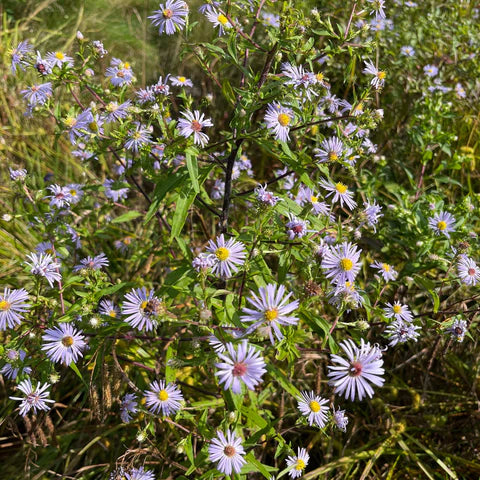
A tall native perennial of moist habitats, Swamp Aster produces late blue-violet flowers that support pollinators and add structure to rain gardens, shorelines, wet meadows, and naturalized plantings.
- Quantity
- Around 200 seeds
- Exposure
- Full sun to partial shade
- Life cycle
- Perennial
- Hardiness
- USDA Zones 3 to 8
Discover the plant
Common nameSwamp Aster
FamilyAsteraceae
GenusSymphyotrichum
Speciespuniceum
Cultivar
TypeNative plant
Botanical nameSymphyotrichum puniceum
Reproducible seedsYes
Swamp Aster (Symphyotrichum puniceum) is a tall native perennial with sturdy stems that are often flushed reddish purple and covered in coarse hairs. Its green, lance-shaped, toothed leaves create a bold upright mass with strong natural character. From late summer until the first hard frosts, the plant carries numerous daisy-like blooms with blue-violet, lavender, or purple rays surrounding yellow centres that deepen in colour as they mature. This generous late display extends garden interest well into autumn. Exceptionally hardy in Quebec and much of Canada, this deciduous species returns reliably each year and usually develops its most impressive stature in consistently moist or wet soil.
Swamp Aster performs best in full sun or partial shade and in loamy, clay-based, or organic soil that remains moist. It is particularly suitable for rain gardens, vegetated ditches, shorelines, and low areas where summer moisture is dependable. Seeds may be scattered outdoors in autumn to receive natural winter chilling or sown in spring after moist cold stratification. Once seedlings are established, keep the root zone evenly moist without creating prolonged stagnant water. In Quebec and elsewhere in Canada, a light spring application of compost is generally sufficient. Avoid excessive fertilizer, which may encourage overly lush growth and weak stems that require additional support.
In the garden, Swamp Aster is especially valuable to bees, bumblebees, butterflies, and many beneficial insects seeking nectar and pollen late in the season. Its height provides structure at the back of naturalistic borders, in wet meadows, and throughout ecological restoration plantings. It combines naturally with Spotted Joe-Pye Weed, Goldenrod, Cardinal Flower, and Northern Blue Flag. Dry stems and spent flower heads can remain standing through winter to provide shelter and resources for wildlife before being cut back in spring. Although searches for swamp aster uses, edible qualities, or traditional properties occur, this species is offered here for ornamental, pollinator, habitat, and restoration purposes.

Sowing guide
It all startswith a seed.
Sowing depth
Surface sow or cover up to 3 mm
Spacing / density
45 to 60 cm (18 to 24 in)
Germination temperature
18 to 22°C after stratification
Germination time
14 to 30 days after stratification
Sowing period
Autumn or spring after cold stratification
Propagation
Stratified seed or clump division
Cold stratification
Yes
Growing method
Purple-Stemmed Aster is easily grown from cold-stratified seeds. Sow the seeds about 3 mm deep in a rich, moist growing medium and maintain temperatures between 18 and 22°C (64 to 72°F). Germination usually occurs within 15 to 30 days when consistent moisture is maintained. This native perennial prefers moist soils in full sun to partial shade. Once established, it returns reliably every year and develops into a large, vigorous perennial. Its late-season flowers provide an essential nectar source for pollinators throughout Canada.
Soil and care
The right care,at the right time.
Soil pH
Approximately 5.5 to 7.0
Minimum temperature
Approximately -40°C
Care level
Moderate
Watering
Regular; keep the soil moist to wet
Soil type
Loamy, clay-based, or organic, moist to wet soil
Fertilization
Light application of compost in spring
Moisture
Moderate to high; prefers moist to wet soil
Seasonal care
In spring, cut back dry stems before new shoots emerge and apply a thin layer of compost around the plants. When stems reach approximately 30 to 45 cm, optional pinching can encourage a more branched and somewhat shorter habit. Throughout summer, monitor soil moisture regularly, especially during hot or dry weather, and water deeply whenever the ground begins to dry. Stake plants in exposed sites if their tall growth becomes vulnerable to wind or lodging. In autumn, leave spent flower heads and stems standing to provide resources for birds and insects while maintaining valuable structure and visual interest through the Canadian winter.
Container growing
A garden,within reach.
Recommended pot size
30 to 40 cm (12 to 16 in)
Purple-Stemmed Aster can be grown in a large, deep container with excellent drainage. Use a rich growing medium that retains moisture without becoming waterlogged. This native perennial benefits from regular watering during warm weather to support vigorous growth and abundant late-season blooms. In containers, it attracts numerous pollinators to patios and balconies while creating a spectacular natural display.

Bloom and dimensions
Its place,in your garden.
Mature height
Approximately 180 cm
Width / spread
Approximately 90 cm
Flower color
Blue-violet to purple with yellow centres
Foliage color
Green
Foliage type
Deciduous
Growth rate
Moderate to fast in moist soil
Growth habit
Upright, branching and clump-forming
Fragrance
Little to no fragrance
Bloom period
August to October
Fruiting
Dry achenes with a feathery pappus
Days to maturity
Usually flowers from the second year
Harvest
Mature seeds from September to November
Garden associations
In goodcompany.
Companion plants
Spotted Joe-Pye Weed, Goldenrod, Cardinal Flower, Northern Blue Flag
Plants to avoid
Lavender, cotton lavender, stonecrop, and other dry-soil plants
Frequently asked questions
Your questions,answered.
When should Swamp Aster seeds be sown?
Purple-Stemmed Aster seeds are best sown in autumn or in spring after a period of cold stratification to improve germination.
Why does Swamp Aster attract so many pollinators?
Its abundant late-season blooms provide nectar and pollen when many other flowers have completed their flowering cycle, making it especially valuable to pollinators.
Can Swamp Aster grow in a rain garden?
Yes. This species thrives in rich, moist soils and is an excellent choice for rain gardens and other moisture-retentive landscapes.
Is Swamp Aster hardy in Quebec?
Yes. Purple-Stemmed Aster is fully hardy and perfectly adapted to the severe winters found throughout much of Canada.
What are the main qualities of Swamp Aster?
Consistently moist soil, an annual application of compost, and cutting back old stems in spring are generally all that is required to keep this native perennial healthy.
Wildlife and pets
Life,around your plants.
Attracts birds
Yes
Native plant
Yes
Supporting wildlife
Bees and butterflies
For a great start to your seeds
The right extras.Right here.
Seed Starting Soil
Shop the collectionSeed starting supplies
Shop the collection





