

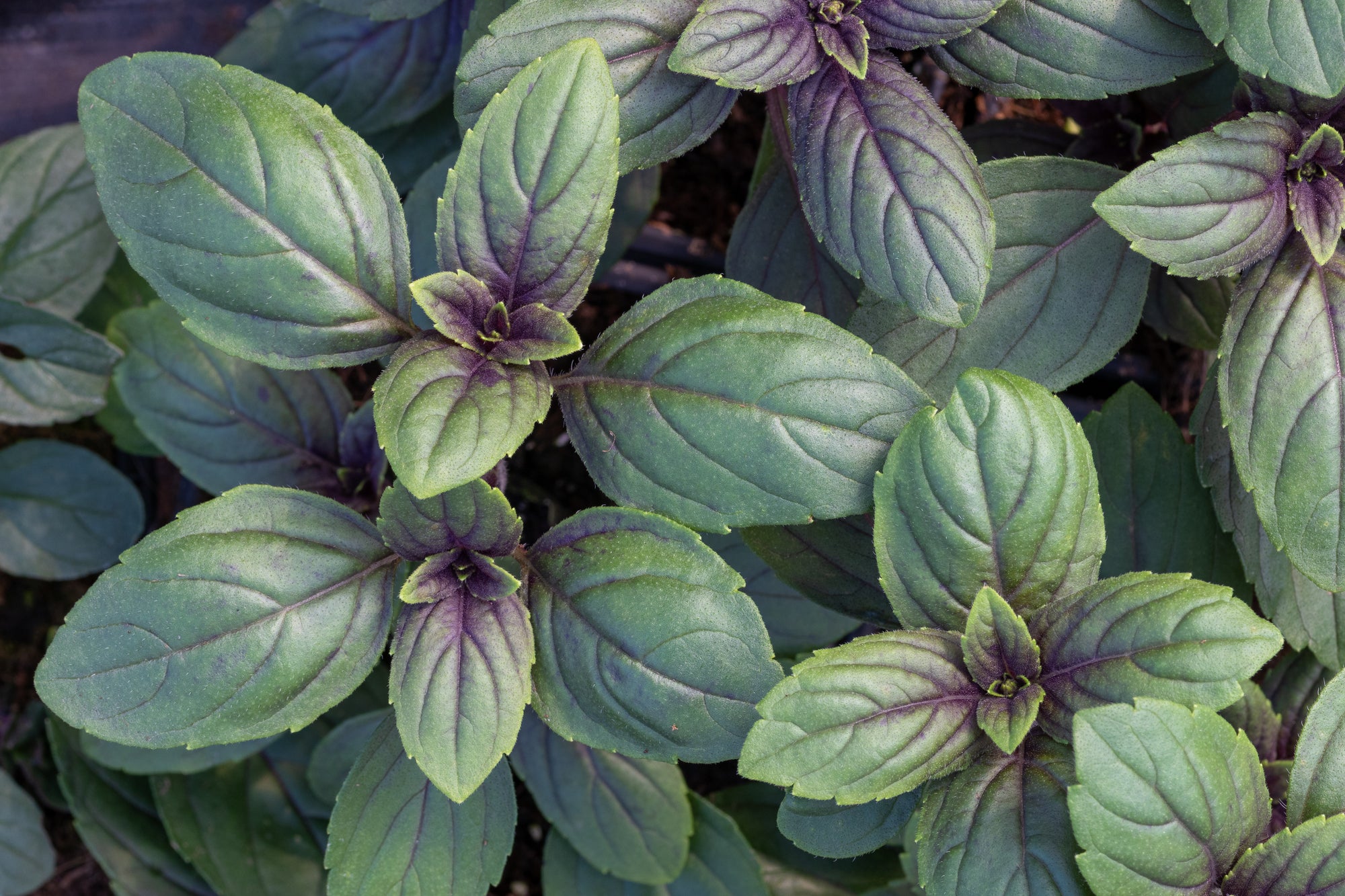
Basil 'Magic Mountain'
‘Magic Mountain’ basil is a decorative and aromatic variety highly valued for its dark green foliage with purple hues, colored stems, and abundant purple flowers. More ornamental than many classic basil varieties, it makes a spectacular statement in pots, herb planters, urban vegetable gardens, and edible flowerbeds. Its fragrance is reminiscent of traditional basil, with a slightly spicy note, making it an interesting plant for both cooking and landscaping.
Easy to grow, ‘Magic Mountain’ basil prefers a warm, sunny location in fertile, light, well-drained soil. It performs very well in containers, on a patio, or near the kitchen, where its foliage can be harvested as needed to flavor sauces, salads, tomato dishes, pasta, and summer recipes. Regular watering, without overwatering, helps maintain vigorous growth and flavorful foliage throughout the season.
Unlike many basil varieties that quickly lose their appeal after flowering, ‘Magic Mountain’ remains decorative longer thanks to its purple flower spikes and dense habit. Its flowers attract bees and pollinators, making it an excellent choice for productive and biodiverse gardens. This basil is ideal for adding color, fragrance, an edible touch, and a remarkable ornamental effect to outdoor spaces.
Care guide
Choosing this plant
Light, soil, water and hardiness
Blooming, foliage and shape
Size and growth
Companion planting, spacing and harvest

Pets

Butterflies

Hummingbirds

Repellent
The availability of our plants varies depending on arrivals, seasons, nursery production and supplier availability. Some varieties may be offered for a limited time only, depending on their natural cycle or current stock. These plant profiles are designed to guide and inspire you when choosing plants for the garden, landscaping projects, containers or long-lasting outdoor arrangements.


