


Grand arbre indigène patrimonial pour ombre et biodiversité
White oak
White oak
Products and available quantities may vary between Brossard and Laval. To check a store’s inventory, please contact us directly.
Even better: visit us in store to discover the full selection available!
- Quantity
- 50 mm / Spindle basket
- Exposure
- Full sun; light partial shade tolerated
- Hardiness
- Zone 3
Discover the plant
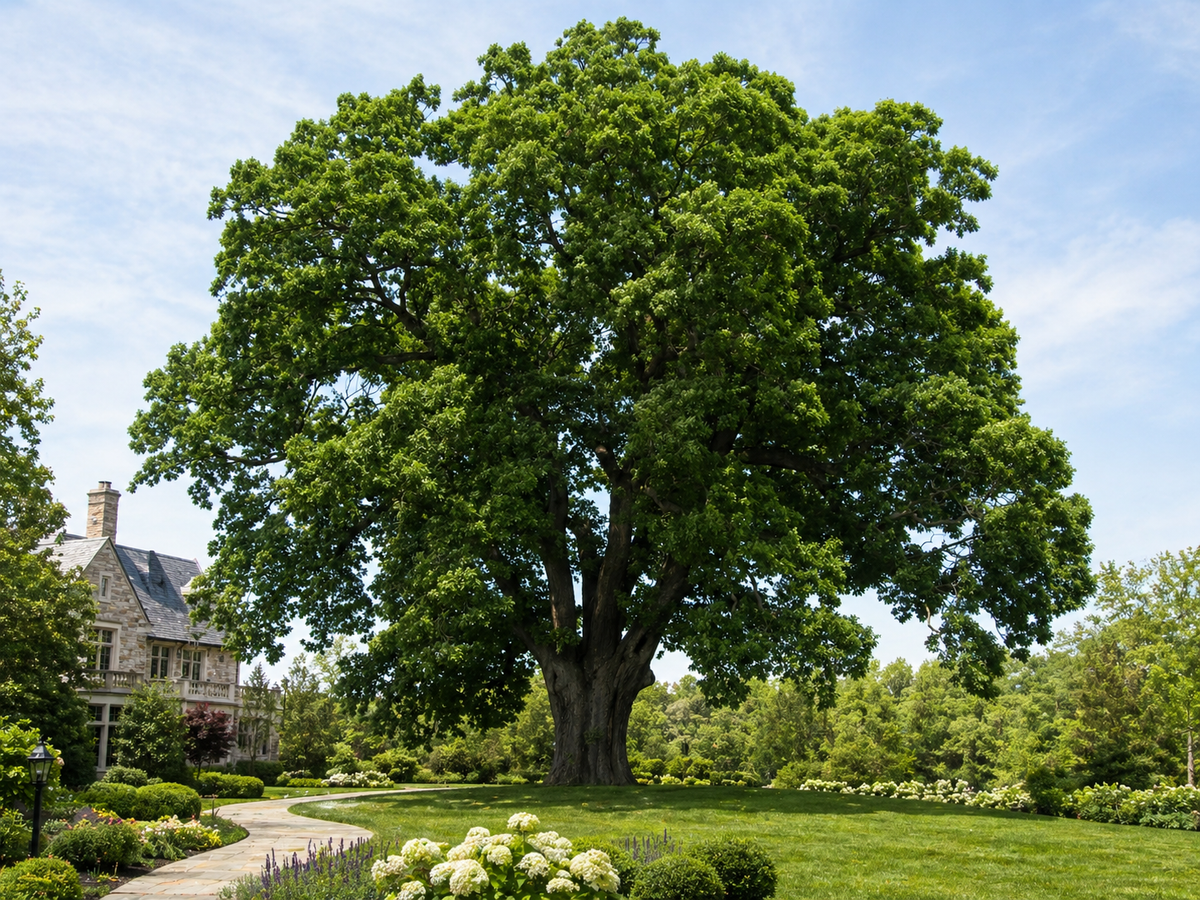
White Oak (Quercus alba) is a large native tree found in southern Quebec and Ontario, prized for its longevity, majestic crown, and ecological value. Its leaves with rounded lobes emerge pinkish, turn dark green with a paler underside, then transform into reddish-purple to wine-brown hues in autumn. The pale gray bark forms characteristic plates with age. Expect a height of approximately 20 to 30 m (66 to 98 ft) and a comparable width at maturity. Its initially pyramidal habit becomes broadly rounded, irregular, and spreading, creating generous shade in large landscapes.
Plant white oak in full sun in deep, loose, slightly acidic, fresh, and very well-drained soil. It adapts to various soil textures and tolerates moderate drought after establishment but dislikes standing water, compaction, and work that disturbs its roots. Its taproot makes transplanting large specimens difficult; a young tree well-established in the right place yields the best results. Water deeply during the first few seasons, apply 5 to 8 cm (2 to 3 in) of mulch without covering the collar, and protect a large root zone. Hardy to Zone 3, it is suitable for locations where it can remain for several generations.
Use white oak as a shade tree, heritage specimen, park tree, or a cornerstone of a naturalized planting. Its acorns mature in a single season and feed jays, woodpeckers, wild turkeys, squirrels, deer, and other mammals; its foliage also supports numerous butterflies and moths. Place it away from buildings, wires, paved surfaces, septic tanks, and drains. Acorns and young leaves, rich in tannins, can be harmful in large quantities, especially to horses. Prune during dormancy to limit the risk of oak wilt. Also monitor for anthracnose, galls, scale insects, and borers, while avoiding unnecessary treatments.

Planting guide
From planting to establishment.
Soil and care
The right care,at the right time.
Soil pH
Minimum temperature
Care level
Drought tolerance
Watering
Soil type
Fertilization
Moisture
Seasonal care
Container growing
A garden,within reach.
Recommended pot size

Bloom and dimensions
Its place,in your garden.
Mature height
Width / spread
Flower color
Foliage color
Foliage type
Growth rate
Growth habit
Bloom period
Fruiting
Harvest
Garden associations
In goodcompany.
Companion plants
Plants to avoid
Wildlife and pets