

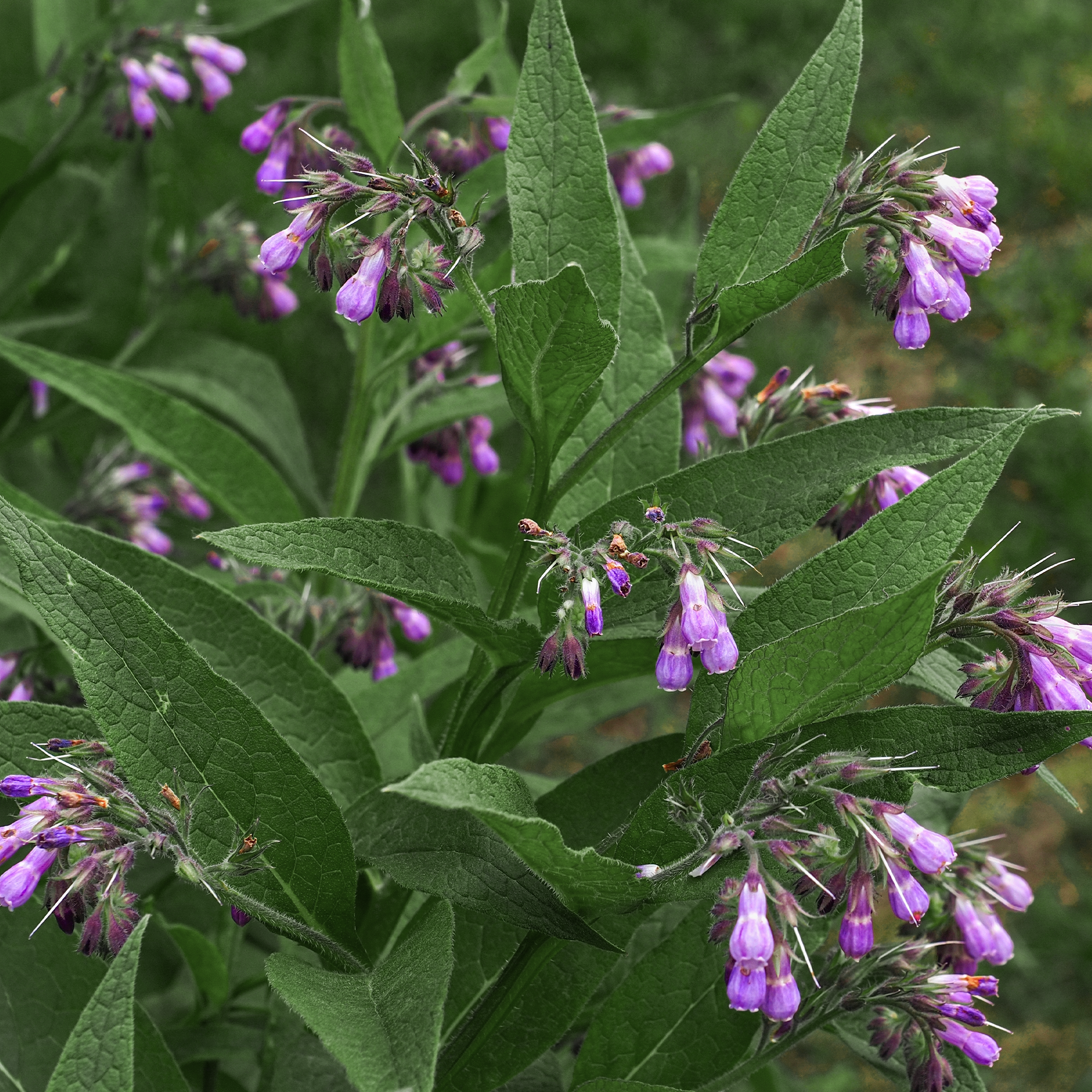
Comfrey
Comfrey is a robust perennial plant, recognized for its large, slightly rough foliage and its flowering in small, drooping bell-shaped flowers, often mauve, pink, white, or bluish depending on the variety. It brings a natural and rustic style to medicinal herb gardens, edible landscapes, perennial borders, and pollinator-friendly spaces. Its vigorous growth makes it an interesting plant for quickly adding volume, texture, and a generous presence to the garden.
Easy to cultivate, comfrey prefers a location in sun or partial shade, in rich, cool, deep, and well-drained soil. It appreciates soils that retain some moisture and can become imposing once established, so it is best to reserve enough space for it. Its dense foliage can be cut during the season and used in the garden as plant material for compost, mulch, or natural horticultural preparations.
Traditionally recognized as a medicinal plant, comfrey is mainly appreciated today for its ecological role, its melliferous flowering, and its usefulness in the garden. It attracts bees and other pollinators, while integrating perfectly into natural gardens, productive vegetable patches, and wilder areas of the land. It is an ideal perennial for gardeners looking for a useful, resistant, decorative, and characterful plant.
Care guide
Choosing this plant
Light, soil, water and hardiness
Blooming, foliage and shape
Size and growth
Companion planting, spacing and harvest

Pets

Butterflies

Deer
The availability of our plants varies depending on arrivals, seasons, nursery production and supplier availability. Some varieties may be offered for a limited time only, depending on their natural cycle or current stock. These plant profiles are designed to guide and inspire you when choosing plants for the garden, landscaping projects, containers or long-lasting outdoor arrangements.


