

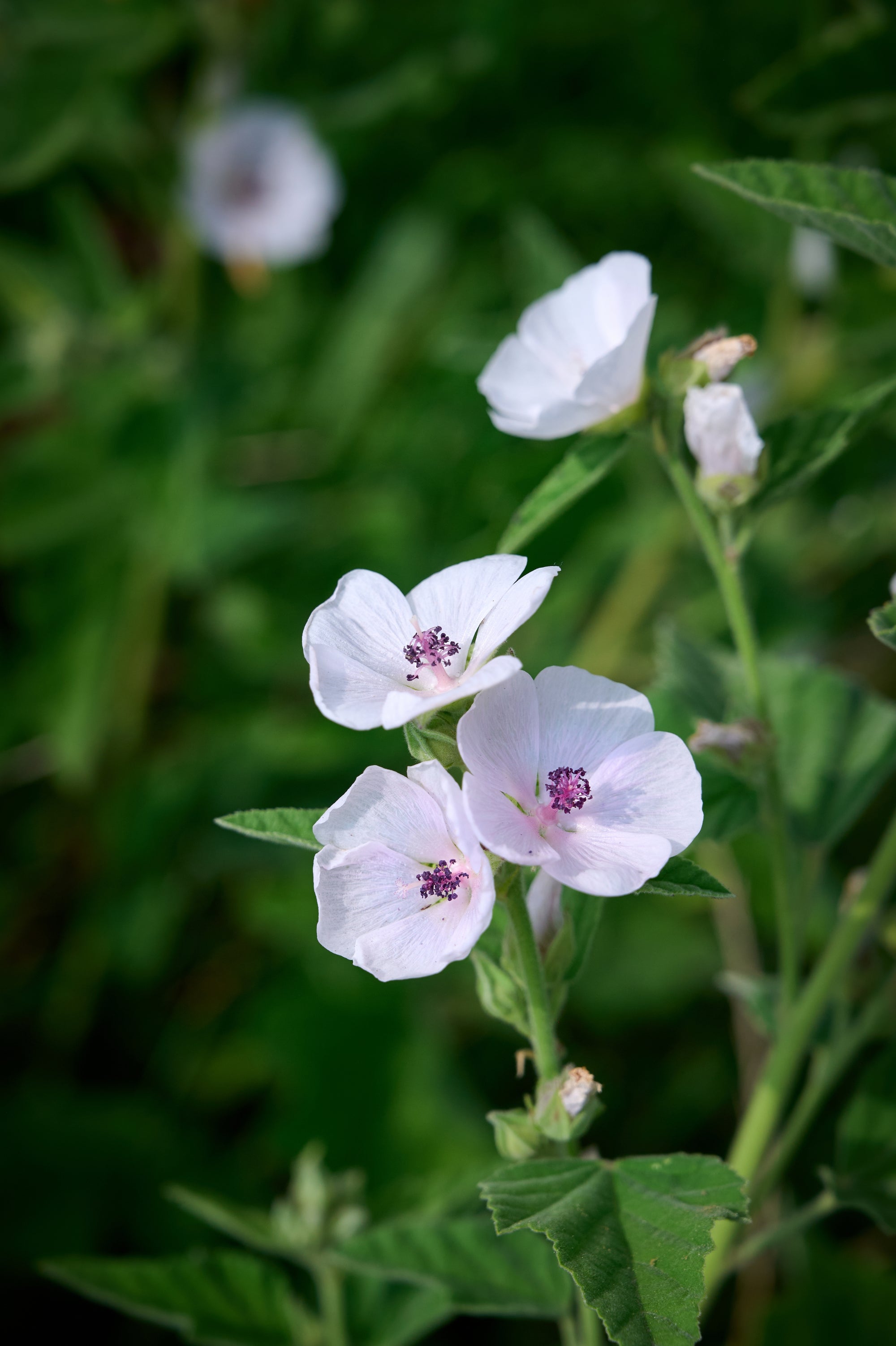
Marshmallow
Marshmallow is a medicinal perennial plant with a soft and natural charm, appreciated for its slightly downy gray-green foliage and pale flowers, often rosy white to soft pink. Its upright and elegant habit brings height, texture, and a rustic touch to medicinal plant gardens, perennial beds, naturalized vegetable gardens, and pollinator-friendly landscapes. It fits very well into wild-inspired gardens, where its velvety foliage creates a beautiful contrast with darker or more colorful plants.
Easy to cultivate, marshmallow prefers a sunny to slightly semi-shady location, in rich, cool, deep, and well-drained soil. It appreciates soils that retain some moisture, especially during hot periods, and can become a beautiful structural plant once established. Its maintenance is simple: regular watering at the beginning, good establishment, and pruning of dry stems at the end of the season are usually sufficient to maintain a vigorous and decorative plant.
Traditionally recognized as a medicinal plant, marshmallow is also cultivated for its ornamental interest, its botanical history, and its delicate flowering. Its flowers attract bees and other pollinators, helping to make the garden more vibrant and biodiverse. It is an ideal perennial for adding a useful, hardy, and elegant plant to a medicinal garden, a natural border, or an edible landscape with a rustic style.
Care guide
Choosing this plant
Light, soil, water and hardiness
Blooming, foliage and shape
Size and growth
Companion planting, spacing and harvest

Pets

Butterflies
The availability of our plants varies depending on arrivals, seasons, nursery production and supplier availability. Some varieties may be offered for a limited time only, depending on their natural cycle or current stock. These plant profiles are designed to guide and inspire you when choosing plants for the garden, landscaping projects, containers or long-lasting outdoor arrangements.


