

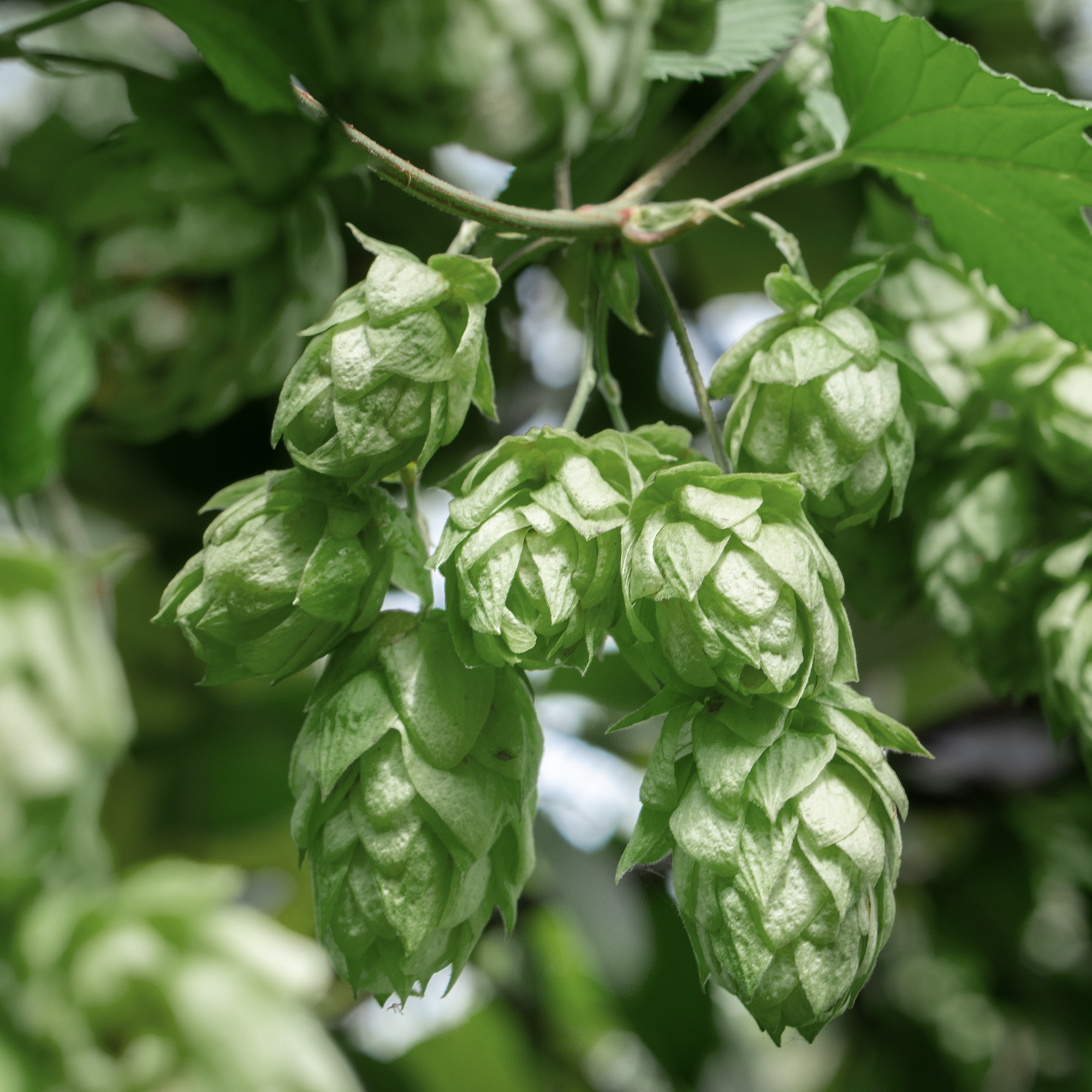
Hop
Hops are a vigorous perennial climbing plant, prized for their abundant green foliage and decorative cones, also known as female flowers. They quickly add height and a lush effect to the garden, making them an excellent choice for covering a pergola, trellis, fence, or vertical structure. In addition to their ornamental appeal, hops are known for their traditional use in beer making, where their cones contribute aromas, bitterness, and complexity.
Easy to grow, hops prefer a sunny to slightly semi-shaded location, in rich, fresh, deep, and well-drained soil. As they grow quickly during the season, they need strong support to climb and develop properly. Regular watering promotes vigorous growth, especially in warm weather, and pruning dry stems at the end of the season helps keep the plant well-controlled. It is best to give them enough space, as they can become imposing once established.
Both decorative, aromatic, and useful, hops are ideal for gardeners who want to integrate an original climbing plant into an edible or natural landscape. Their cones can be harvested when ripe for homemade projects, infusions, decorative creations, or brewing uses. It is a perfect perennial for adding volume, greenery, and a distinctive botanical touch to herb gardens, specialized vegetable gardens, and sunny outdoor spaces.
Care guide
Choosing this plant
Light, soil, water and hardiness
Blooming, foliage and shape
Size and growth
Companion planting, spacing and harvest

Pets
The availability of our plants varies depending on arrivals, seasons, nursery production and supplier availability. Some varieties may be offered for a limited time only, depending on their natural cycle or current stock. These plant profiles are designed to guide and inspire you when choosing plants for the garden, landscaping projects, containers or long-lasting outdoor arrangements.


