

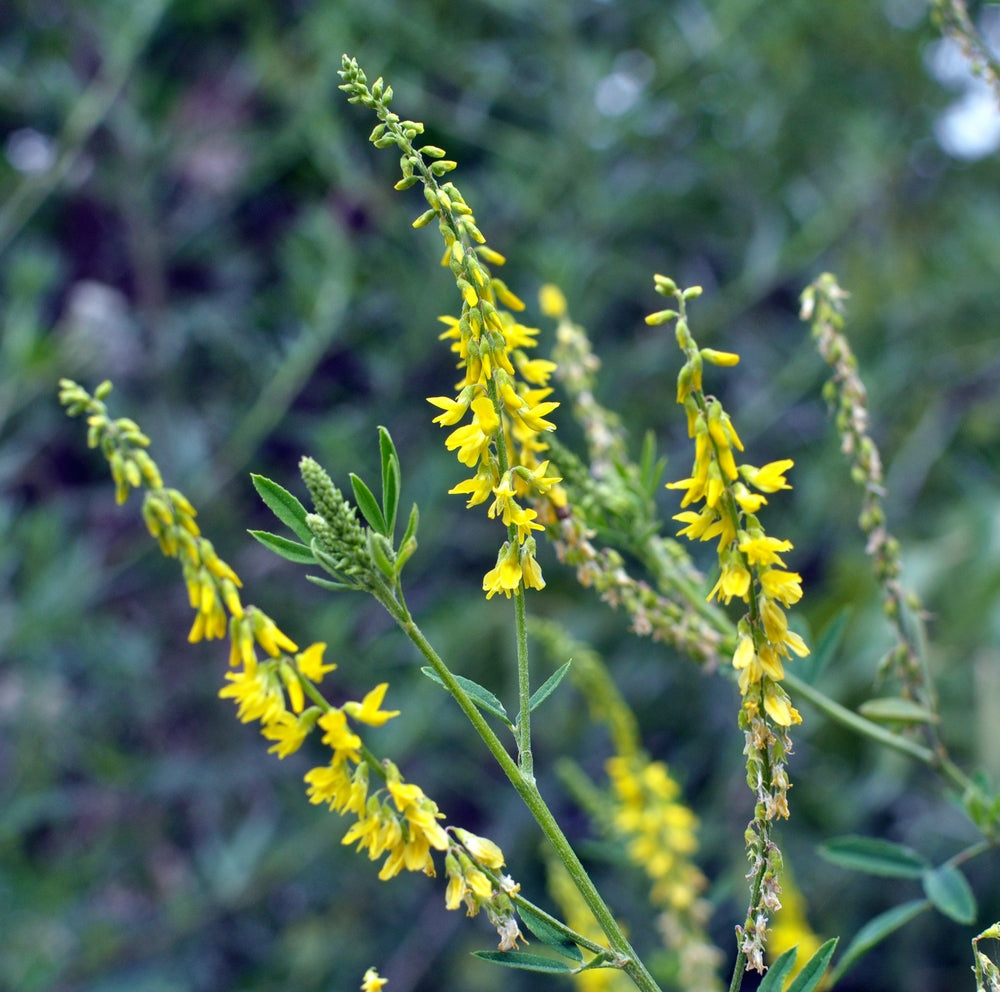
Yellow Sweet Clover
Yellow sweet clover is a biennial medicinal and melliferous plant, appreciated for its airy habit, fine foliage, and long clusters of small, fragrant yellow flowers. Its rustic appearance integrates very well into medicinal plant gardens, naturalized landscapes, wild borders, and pollinator-friendly spaces. Its bright bloom adds height, movement, and a natural touch to sunny flowerbeds.
Easy to cultivate, yellow sweet clover prefers a sunny location, in light, well-drained, and moderately fertile soil. It tolerates poor soils and drier conditions quite well once established, making it an interesting plant for prairie-style gardens, embankments, naturalized areas, and low-maintenance landscapes. Its slender growth allows it to be used as a background plant or as a light element among perennials and grasses.
Highly valued by bees and other beneficial insects, yellow sweet clover helps enrich garden biodiversity. Traditionally recognized as a medicinal and aromatic plant, it also releases a sweet scent, slightly reminiscent of freshly cut hay when dried. It is an ideal plant for gardeners looking for a useful, melliferous, natural species that is easy to integrate into a medicinal garden or a rustic landscape.
Care guide
Choosing this plant
Light, soil, water and hardiness
Blooming, foliage and shape
Size and growth
Companion planting, spacing and harvest

Pets

Butterflies

Deer
The availability of our plants varies depending on arrivals, seasons, nursery production and supplier availability. Some varieties may be offered for a limited time only, depending on their natural cycle or current stock. These plant profiles are designed to guide and inspire you when choosing plants for the garden, landscaping projects, containers or long-lasting outdoor arrangements.


