

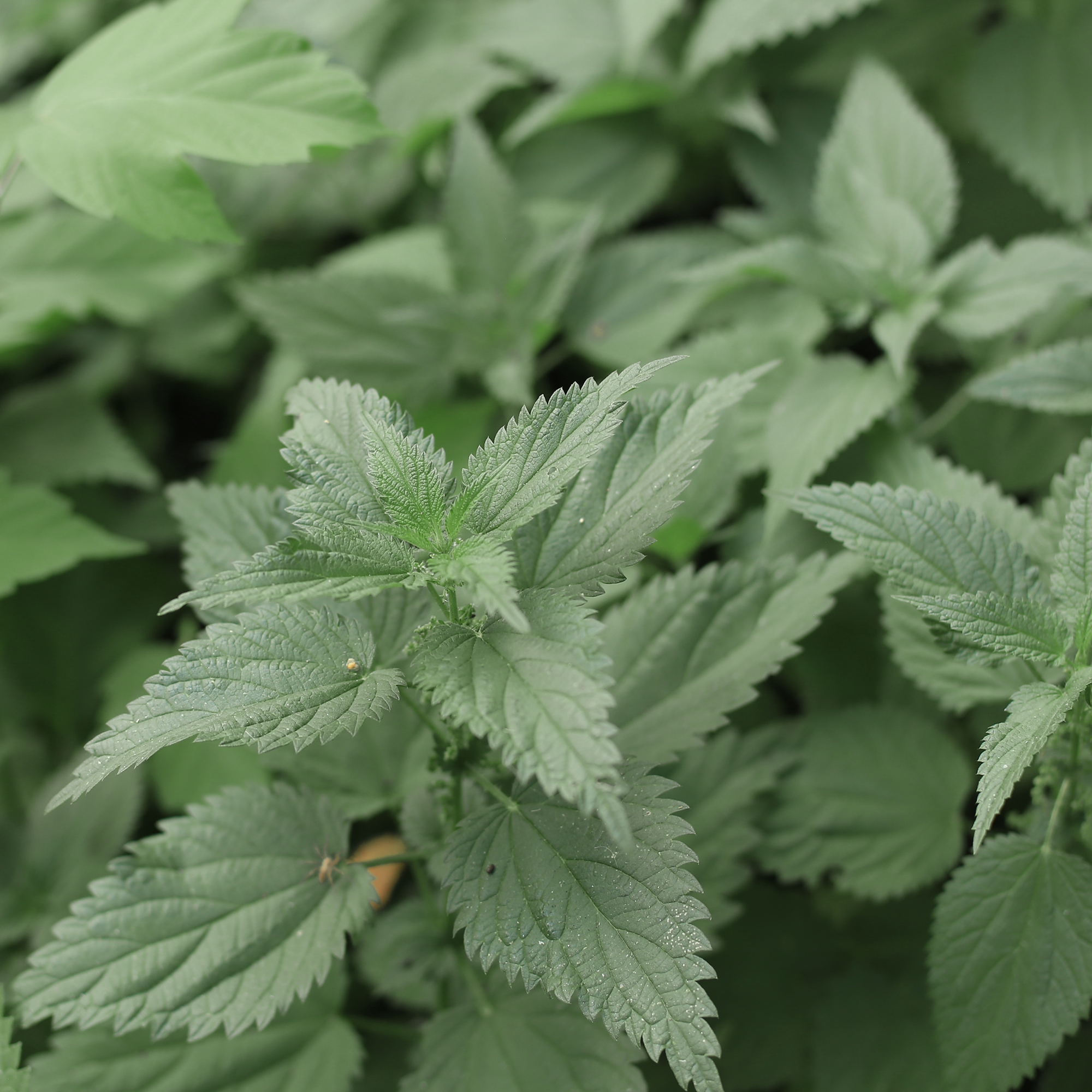
Nettle
Nettle is a perennial medicinal and edible plant known for its serrated green foliage, rich in character and very useful in herb, medicinal, and naturalized gardens. Often associated with wild gardens, it has great ecological value, as it supports several beneficial insects and contributes to biodiversity. Its young leaves can be carefully harvested and used cooked in soup, herbal tea, pesto, omelets, or homemade preparations, once their stinging effect is neutralized by cooking or drying.
Easy to cultivate, nettle prefers a location in full sun or partial shade, in rich, fresh, fertile, and well-drained soil. It thrives in soils with plenty of organic matter and can become vigorous once established, so it is best to plant it in a controlled space, a naturalized corner, or a large container. As its leaves and stems are stinging to the touch, it is recommended to wear gloves when handling, maintaining, or harvesting it.
Highly valued in ecological gardening, nettle can also be used to prepare plant extracts, nettle fertilizer, or green matter to enrich compost. Both robust, nutritious, and full of botanical interest, it is ideal for gardeners looking for a useful, sustainable, and biodiversity-friendly plant. It is an excellent plant for enriching a medicinal garden, a natural vegetable patch, or a space dedicated to edible and traditional plants.
Care guide
Choosing this plant
Light, soil, water and hardiness
Blooming, foliage and shape
Size and growth
Companion planting, spacing and harvest

Pets

Butterflies

Deer
The availability of our plants varies depending on arrivals, seasons, nursery production and supplier availability. Some varieties may be offered for a limited time only, depending on their natural cycle or current stock. These plant profiles are designed to guide and inspire you when choosing plants for the garden, landscaping projects, containers or long-lasting outdoor arrangements.


