


Native evergreen groundcover for dry, acidic, lean soil
Bearberry
Arctostaphylos uva-ursi
Products and available quantities may vary between Brossard and Laval. To check a store’s inventory, please contact us directly.
Even better: visit us in store to discover the full selection available!
- Quantity
- 1 gallon
- Exposure
- Full sun to light shade
- Hardiness
- Zone 2
Discover the plant
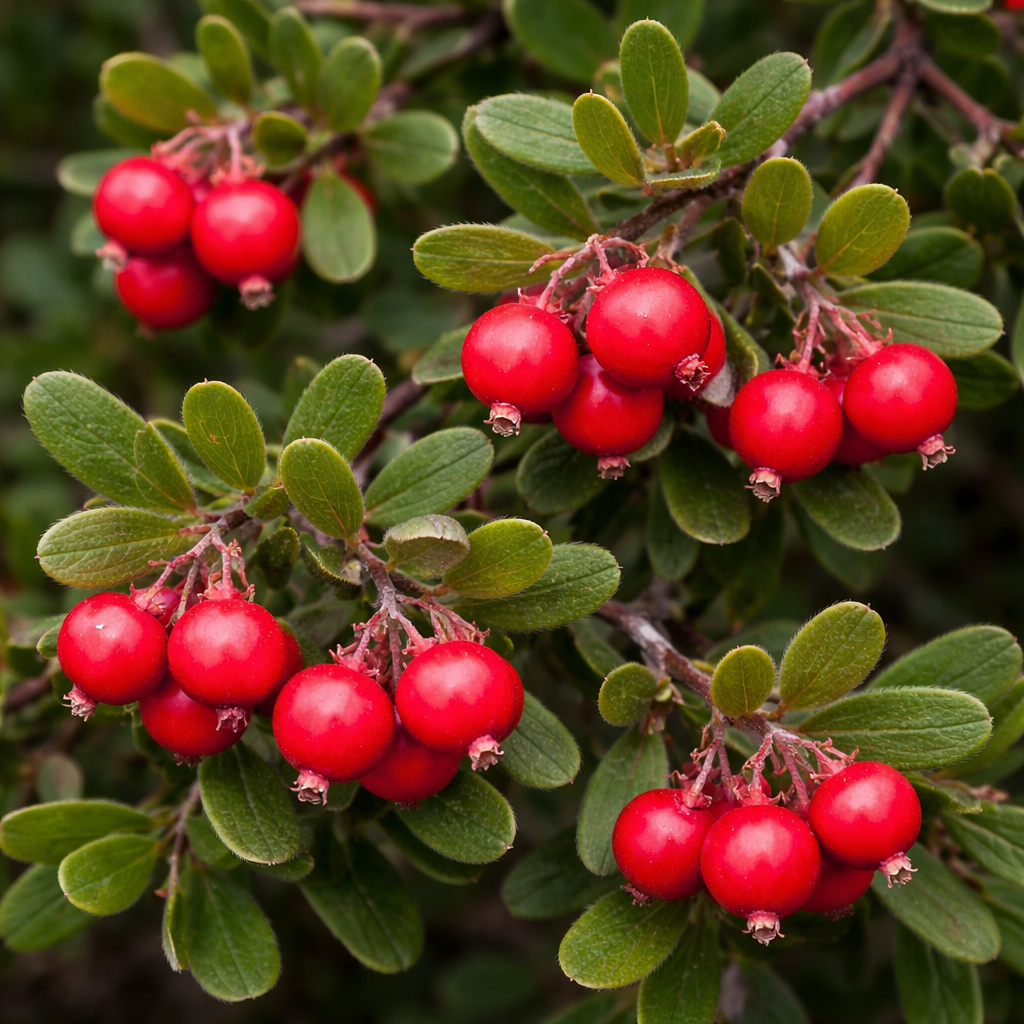
Bearberry (Arctostaphylos uva-ursi) is a native, circumboreal evergreen groundcover shrub that slowly forms a mat of trailing stems. Small leathery dark-green leaves are glossy and often develop bronze tones in winter. In spring, clusters of pinkish-white urn-shaped flowers appear at shoot tips and later become bright-red berries valued by birds and several mammals. Plants generally stand 10 to 20 cm high and can spread 75 to 150 cm (4 to 8 in × 2.5 to 5 ft). Hardy to Zone 2, bearberry provides four seasons of interest while remaining low enough for slopes, rock gardens, and open conifer plantings.
Plant bearberry in full sun or light shade and acidic, sandy or rocky, lean, sharply drained soil. It prefers low to moderate moisture and tolerates drought well after roots establish. Heavy, compacted, or constantly wet ground encourages root disease. Set the crown at soil level, water consistently through the first season, and reduce frequency once trailing stems begin to root. Space plants 30 to 60 cm (12 to 24 in) apart to form a mat. Avoid rich fertilizer and excessive compost because this species performs better in lean conditions resembling its natural habitat. A thin mineral mulch can keep fruit and foliage clean without holding excess moisture.
Use Arctostaphylos uva-ursi to stabilize a slope, cover sandy soil, edge a rock garden, or carpet the bright base of a conifer planting. Rooting stems hold soil and reduce bare patches, but the plant does not tolerate repeated foot traffic. Choose its position carefully because established bearberry resents transplanting. Prune only dead shoots or stems that extend beyond the intended area, preferably after flowering. Watch for leaf spots and dieback where drainage is poor. The berries are technically edible but dry and mealy; they are far more valuable for wildlife and fall colour. This slow-growing groundcover rewards patience with a durable, natural-looking evergreen mat.

Planting guide
From planting to establishment.
Soil and care
The right care,at the right time.
Soil pH
Minimum temperature
Care level
Drought tolerance
Watering
Soil type
Fertilization
Moisture
Seasonal care
Container growing
A garden,within reach.
Recommended pot size

Bloom and dimensions
Its place,in your garden.
Mature height
Width / spread
Flower color
Foliage color
Foliage type
Growth rate
Growth habit
Fragrance
Bloom period
Fruiting
Garden associations
In goodcompany.
Companion plants
Plants to avoid
Frequently asked questions
Your questions,answered.
How much area does one bearberry plant cover?
What soil is best for bearberry?
Are bearberry berries edible?
Why is my bearberry browning or declining?
Can bearberry replace a lawn?
Wildlife and pets