

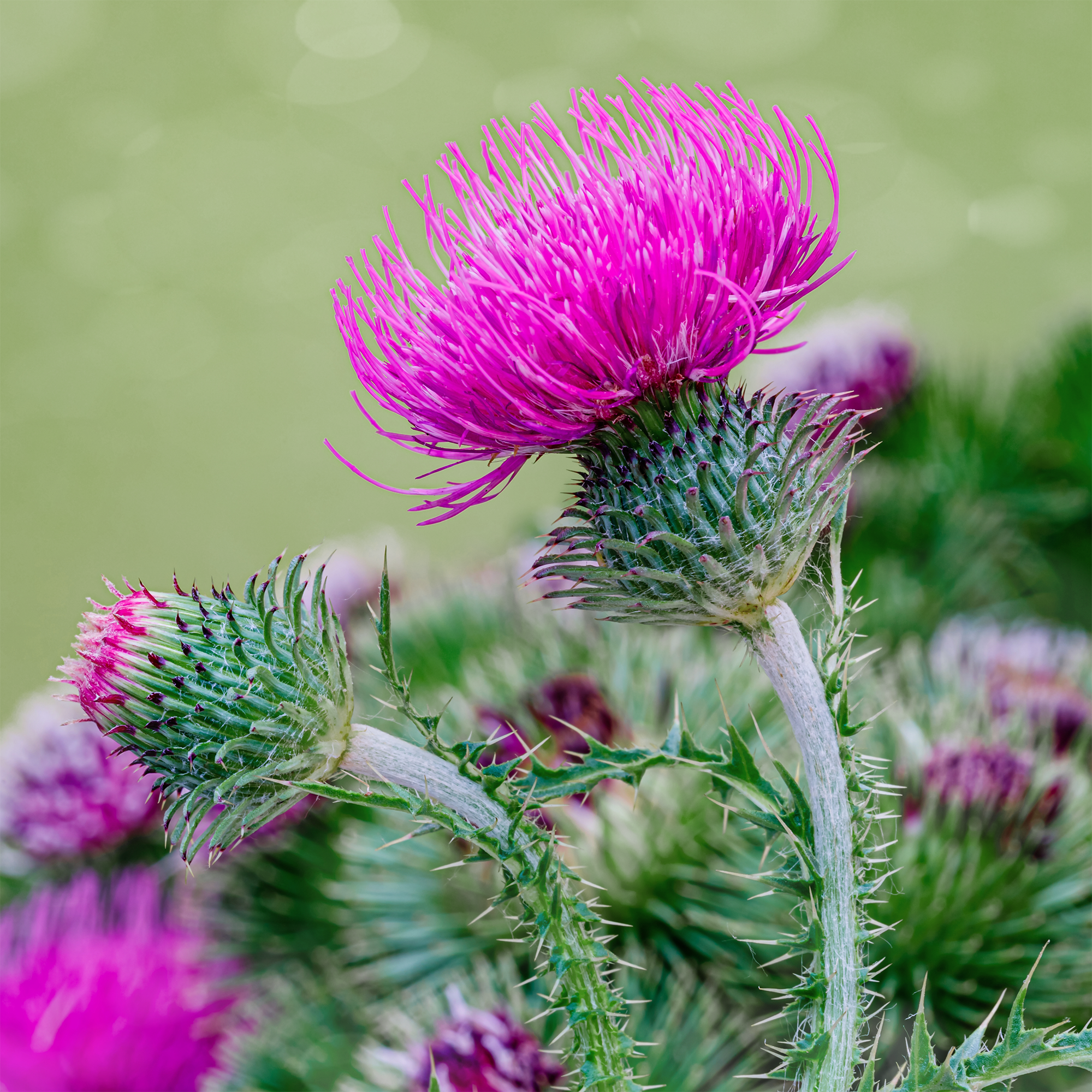
Milk thistle
Milk thistle is a very distinctive medicinal annual or biennial plant, recognized for its white-marbled green foliage and large, wild-looking purple flowers. Its robust and architectural habit brings height, texture, and a lot of character to medicinal plant gardens, naturalized flowerbeds, specialized vegetable gardens, and country-style landscapes. Very decorative, it easily stands out with its contrasting spiny leaves and its original, eye-catching bloom.
Easy to cultivate, milk thistle prefers a sunny location in well-drained, light to moderately fertile soil. It tolerates dry conditions quite well once established and is suitable for gardens requiring resistant, structured, and low-maintenance plants. As its foliage is spiny, it is best to reserve a spot for it where it can develop without hindering passage, at the back of a flowerbed, in a medicinal garden, or in a naturalized area.
Traditionally recognized as a medicinal plant, milk thistle is also appreciated for its ornamental interest and its ecological value in the garden. Its flowers attract pollinators, while its seeds can attract certain birds at the end of the season. It is an ideal plant to add a strong, botanical, and textured presence to a useful plant garden, a wild border, or a sunny landscape with a natural style.
Care guide
Choosing this plant
Light, soil, water and hardiness
Blooming, foliage and shape
Size and growth
Companion planting, spacing and harvest

Pets

Butterflies

Deer
The availability of our plants varies depending on arrivals, seasons, nursery production and supplier availability. Some varieties may be offered for a limited time only, depending on their natural cycle or current stock. These plant profiles are designed to guide and inspire you when choosing plants for the garden, landscaping projects, containers or long-lasting outdoor arrangements.


