

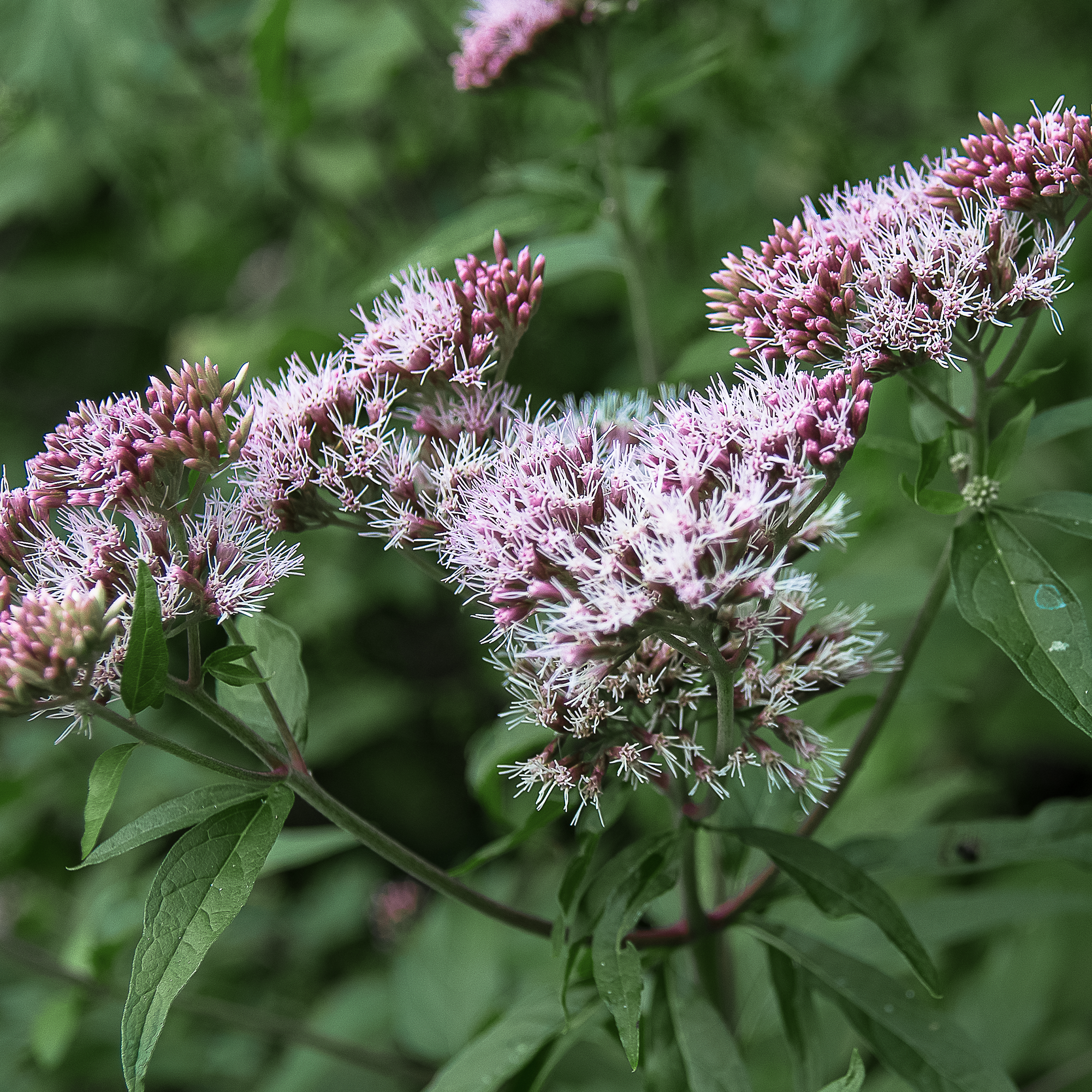
Eupatorium
Eupatorium is a large, ornamental perennial with a natural habit, valued for its generous bloom in large pink, mauve, or purple clusters, depending on the variety. It adds significant height, volume, and movement to flowerbeds, naturalized gardens, prairie-style landscapes, and pollinator-friendly spaces. Its rustic and elegant appearance makes it an excellent plant for the back of a border, perfect for structuring a garden while adding a soft and spectacular bloom.
Easy to cultivate, eupatorium prefers a sunny or partial shade location, in rich, moist to wet, and well-drained soil. It is particularly well-suited to gardens where the soil retains some moisture, near ditches, ponds, cool areas, or in deep flowerbeds. Once established, it forms a robust and long-lasting clump that returns year after year, with an impressive presence in late summer and early autumn.
Highly attractive to butterflies, bees, and other pollinators, eupatorium is an ideal plant for creating a vibrant, biodiverse, and naturally blooming garden. Its large inflorescences add texture and pair very well with grasses, rudbeckias, coneflowers, monardas, asters, and other late-season perennials. It is an excellent perennial for gardeners seeking a tall, resilient, melliferous, and spectacular plant in a natural or country-style landscape.
Care guide
Choosing this plant
Light, soil, water and hardiness
Blooming, foliage and shape
Size and growth
Companion planting, spacing and harvest

Pets

Butterflies

Deer
The availability of our plants varies depending on arrivals, seasons, nursery production and supplier availability. Some varieties may be offered for a limited time only, depending on their natural cycle or current stock. These plant profiles are designed to guide and inspire you when choosing plants for the garden, landscaping projects, containers or long-lasting outdoor arrangements.


