

Scentless hay
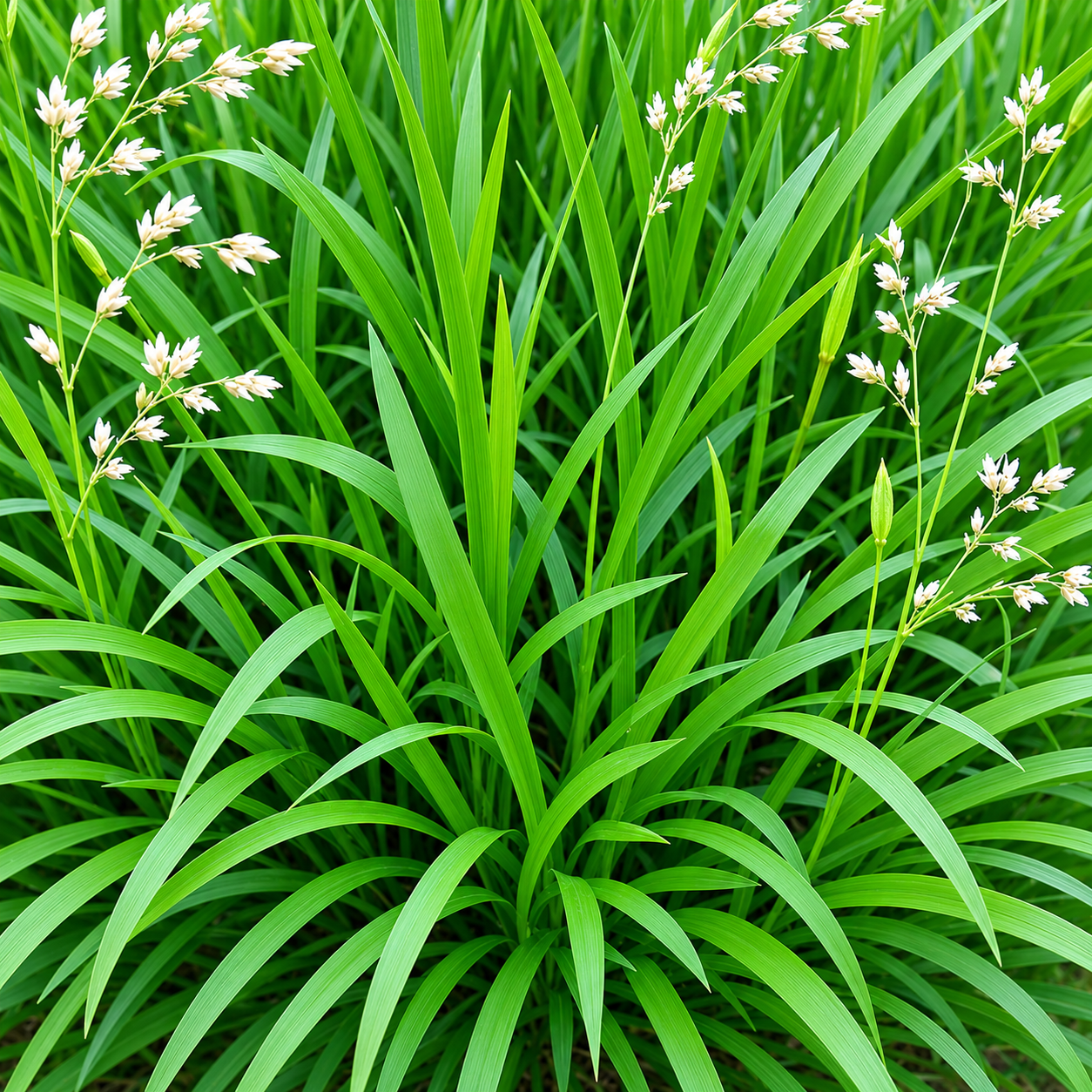
Sweetgrass is a perennial aromatic grass highly valued for its flexible, green, and fragrant foliage, which emits a sweet, vanilla-like scent when dried. Its natural and light habit blends well into medicinal herb gardens, naturalized landscapes, rustic borders, and spaces where one wishes to add a native plant with a unique character. It brings fine texture, movement, and a discreet but very distinctive presence to the garden.
Easy to grow, sweetgrass prefers a location in sun or partial shade, in fresh to moist, fertile, and well-drained soil. It can be planted in the ground, along garden borders, near a damp area, or in a naturalized setting where it can form an elegant clump over the seasons. The foliage can be harvested once the plant is well-developed, then dried to fully enjoy its sweet and aromatic fragrance.
Traditionally recognized as a medicinal, aromatic, and cultural plant, sweetgrass is primarily sought after for its unique fragrance, decorative foliage, and its appeal in natural gardens. It also attracts certain beneficial insects and contributes to enriching the biodiversity of landscapes. It is an ideal plant for gardeners who wish to incorporate a fragrant, durable, and symbolic grass into an herb garden, a naturalized space, or a collection of useful plants.
Care guide
Choosing this plant
Light, soil, water and hardiness
Blooming, foliage and shape
Size and growth
Companion planting, spacing and harvest

Pets
The availability of our plants varies depending on arrivals, seasons, nursery production and supplier availability. Some varieties may be offered for a limited time only, depending on their natural cycle or current stock. These plant profiles are designed to guide and inspire you when choosing plants for the garden, landscaping projects, containers or long-lasting outdoor arrangements.


