


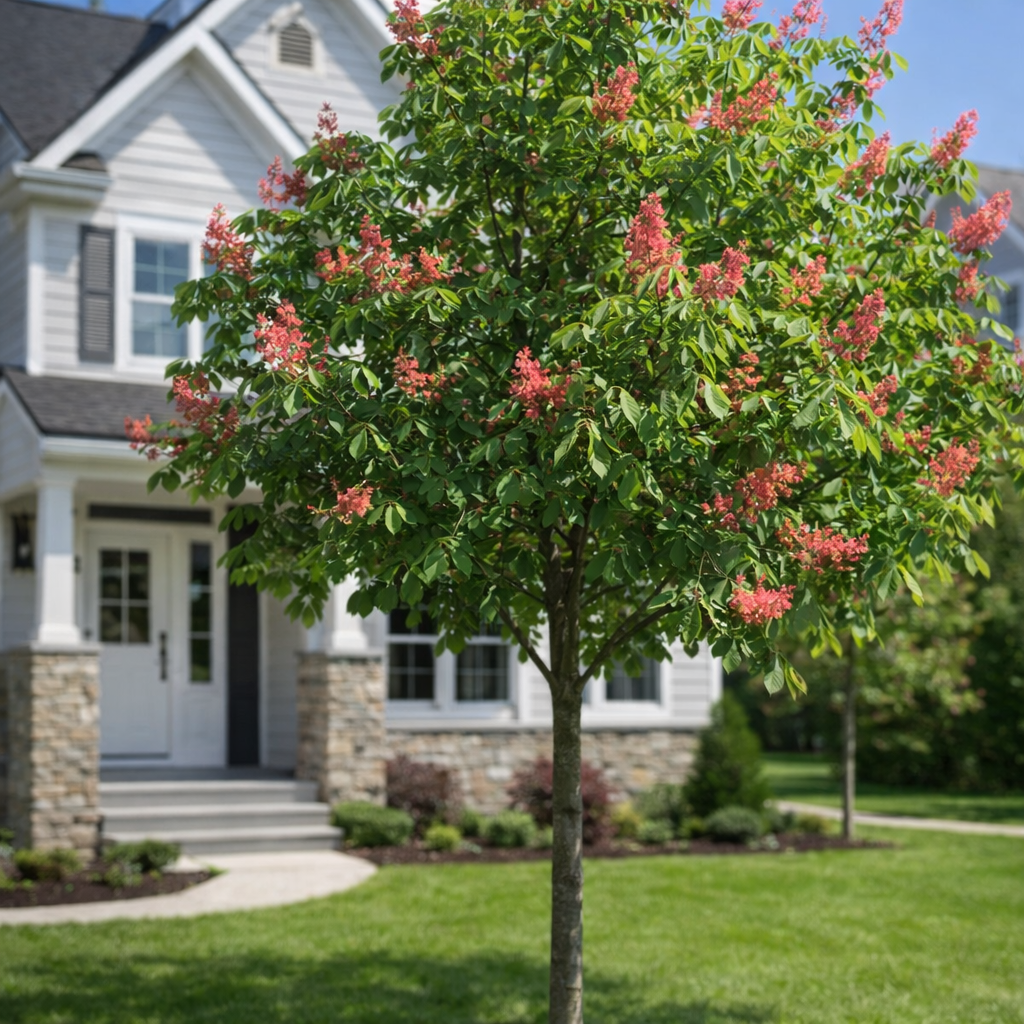
Rounded shade tree with pink flowers
Fort McNair red horse-chestnut
Aesculus × carnea ‘Fort McNair’
Products and available quantities may vary between Brossard and Laval. To check a store’s inventory, please contact us directly.
Even better: visit us in store to discover the full selection available!
- Quantity
- 250 cm; 175 cm; 200 cm; 300 cm
- Exposure
- Full sun to partial shade; strongest bloom and crown density in full sun
- Hardiness
- Zone 4
Discover the plant
Fort McNair red horse-chestnut (Aesculus × carnea ‘Fort McNair’) is a rounded deciduous tree produced from red buckeye and common horse-chestnut. In spring, large upright cone-shaped clusters carry pink flowers with yellow throats against glossy dark-green foliage. This selection has some resistance to leaf blotch, helping the crown retain an attractive appearance. Hardy to Zone 4 in a protected site, it reaches approximately 9 m high and wide (30 ft × 30 ft). A few slightly prickly capsules may contain brown poisonous seeds; no part should be eaten. Grey-brown bark becomes plated with age and adds texture to the winter outline.
Plant ‘Fort McNair’ in full sun or partial shade and deep, cool, well-drained soil, preferably slightly acidic. It also tolerates alkaline conditions and moderate drought after establishment, but growth remains strongest when soil holds even moisture. Dig a hole as deep as the root ball and two to three times as wide, set the root flare level with the soil, and water slowly. Space trees approximately 9 m (30 ft) apart and leave ample distance from buildings and wires. Apply 5 to 8 cm (2 to 3 in) of mulch without touching the trunk and irrigate regularly during dry periods.
Use this horse-chestnut as a specimen or shade tree across a broad lawn, in a park, entrance, or spacious avenue. Flowers attract hummingbirds and insect pollinators, while the rounded crown provides generous shade. Prune lightly during dormancy to remove dead, crossing, or damaged wood; assign large branches to a qualified arborist. Watch for leaf miner, leaf blotch, powdery mildew, cankers, and leaf scorch. Collect fallen fruit and heavily affected leaves, irrigate at soil level, and avoid compaction. Seeds and other horse-chestnut tissues are harmful if eaten, so keep them inaccessible to children and pets. Wash hands after handling fruit and prevent animals from chewing vegetation.

Planting guide
From planting to establishment.
Soil and care
The right care,at the right time.
Soil pH
Minimum temperature
Care level
Drought tolerance
Watering
Soil type
Fertilization
Moisture
Seasonal care
Bloom and dimensions
Its place,in your garden.
Mature height
Width / spread
Flower color
Foliage color
Foliage type
Growth rate
Growth habit
Fragrance
Bloom period
Fruiting
Garden associations
In goodcompany.
Companion plants
Plants to avoid
Frequently asked questions
Your questions,answered.
How large does Fort McNair horse-chestnut grow?
Are Fort McNair seeds edible?
What distinguishes Fort McNair red horse-chestnut?
How can Fort McNair foliage be kept attractive?
Does Fort McNair prefer full sun or partial shade?
Wildlife and pets