

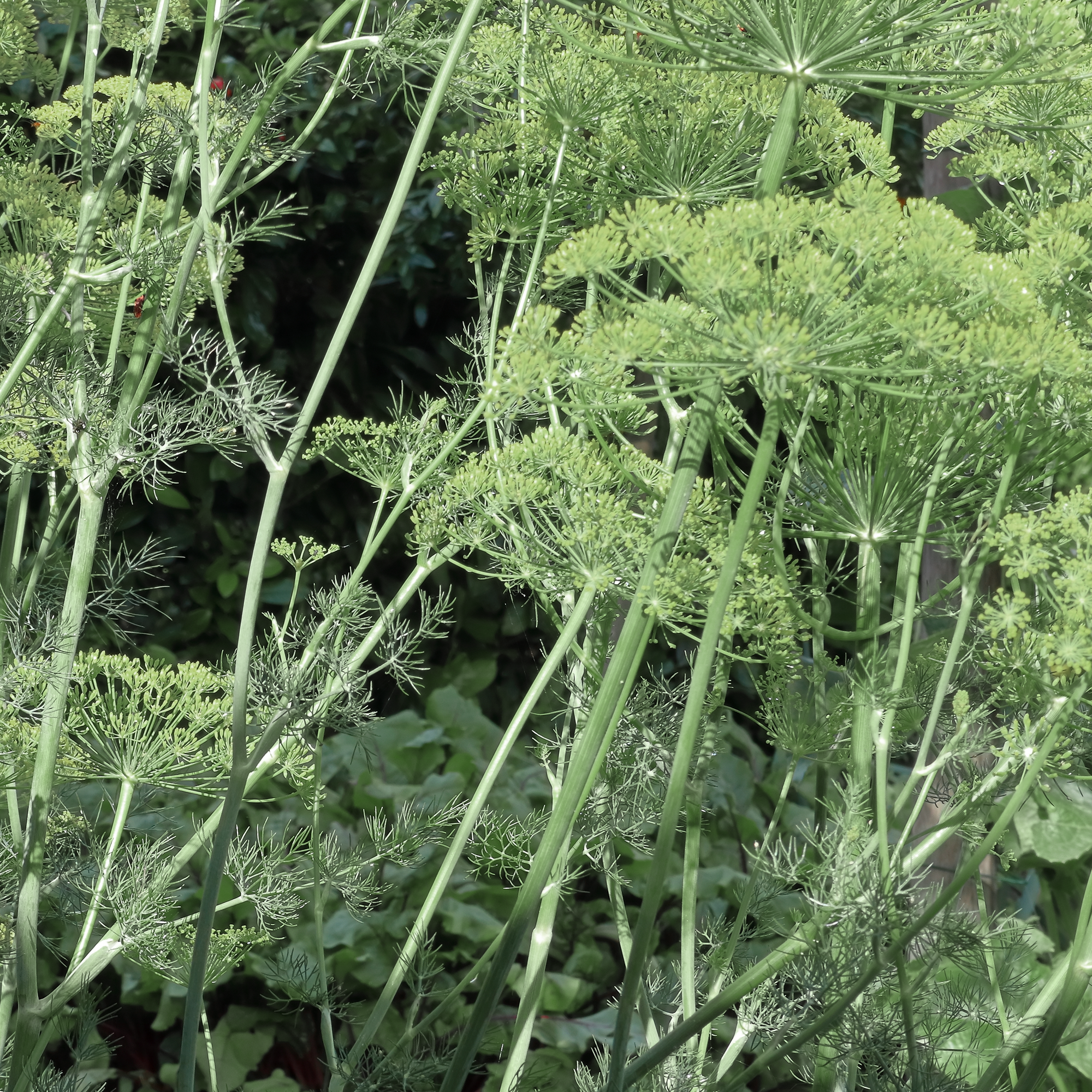
Fennel
Fennel is an aromatic and vegetable plant much appreciated for its fine and light foliage, its aniseed scent, and its great versatility in cooking. Depending on the type grown, it can be sought after for its leaves, its seeds, or its tender and fragrant bulb. Its feathery foliage brings a very decorative texture to the vegetable garden, herb gardens, edible flowerbeds, and natural landscapes, while adding beautiful height to the garden.
Easy to grow, fennel prefers a sunny, warm, and open location, in fertile, deep, light, and well-drained soil. It appreciates regular watering, especially for bulb varieties, to obtain a more tender texture and uniform growth. Its foliage can be harvested as needed to flavor fish, salads, sauces, vegetables, soups, marinades, and Mediterranean dishes. The seeds, once ripe, are also very aromatic and used as a spice.
Both decorative, fragrant, and useful, fennel attracts pollinators and several beneficial insects to the garden thanks to its yellow flower umbels. It fits perfectly into gourmet vegetable gardens, herb gardens, and biodiversity-friendly landscapes. It is an excellent plant for gardeners looking for a generous, elegant, and flavorful herb, capable of adding an aniseed touch to both recipes and outdoor spaces.
Care guide
Choosing this plant
Light, soil, water and hardiness
Blooming, foliage and shape
Size and growth
Companion planting, spacing and harvest

Pets

Butterflies

Deer
The availability of our plants varies depending on arrivals, seasons, nursery production and supplier availability. Some varieties may be offered for a limited time only, depending on their natural cycle or current stock. These plant profiles are designed to guide and inspire you when choosing plants for the garden, landscaping projects, containers or long-lasting outdoor arrangements.


