

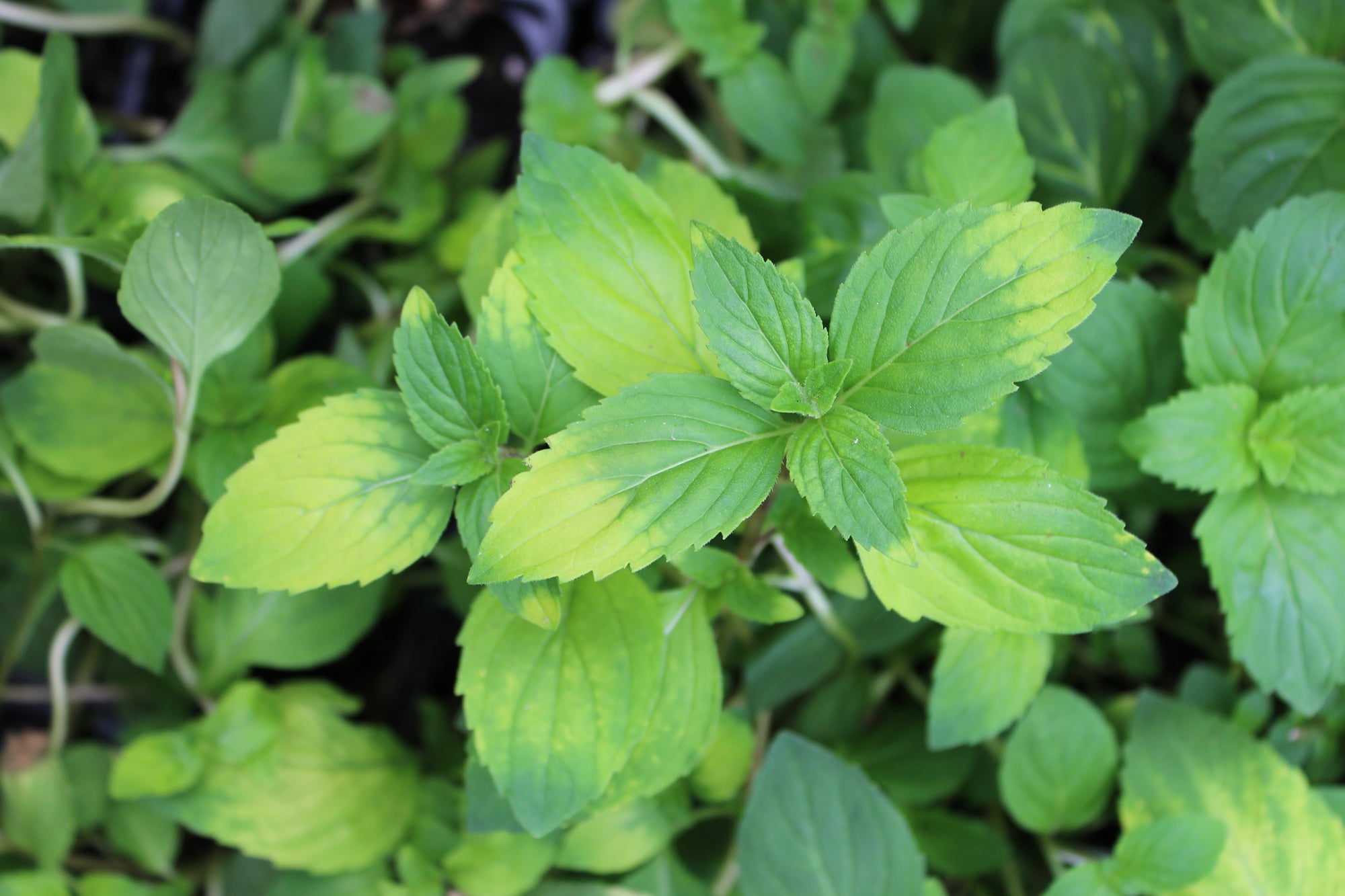
Mint ginger
Ginger mint is a unique perennial aromatic plant, prized for its fragrant green foliage with fresh minty notes, enhanced by a warm and slightly spicy touch reminiscent of ginger. Its distinctive aroma makes it a very interesting variety for herb gardens, edible containers, planters, and patio pots. It brings freshness, fragrance, and originality to gourmet landscaping, while providing an abundant harvest of aromatic leaves throughout the season.
Easy to grow, ginger mint prefers a location with gentle sun or partial shade, in fertile, fresh, and well-drained soil. It appreciates regular watering to maintain tender, flavorful, and fragrant foliage. Like most mints, it can spread quickly in the ground, so it is recommended to grow it in pots or in a confined space to better control its growth. Frequent pruning promotes a denser plant and continuous production of new aromatic shoots.
Very versatile in cooking, ginger mint is ideal for flavoring infusions, iced teas, lemonades, cocktails, marinades, fresh sauces, fruit salads, desserts, Asian dishes, and summer recipes. Its leaves are used fresh to add a minty, lively, and slightly spicy note to homemade preparations. It is an excellent plant for gardeners looking for an easy, productive, and different herb, perfect for enriching an aromatic garden with a more exotic flavor.
Care guide
Choosing this plant
Light, soil, water and hardiness
Blooming, foliage and shape
Size and growth
Companion planting, spacing and harvest

Pets

Butterflies

Repellent
The availability of our plants varies depending on arrivals, seasons, nursery production and supplier availability. Some varieties may be offered for a limited time only, depending on their natural cycle or current stock. These plant profiles are designed to guide and inspire you when choosing plants for the garden, landscaping projects, containers or long-lasting outdoor arrangements.


