

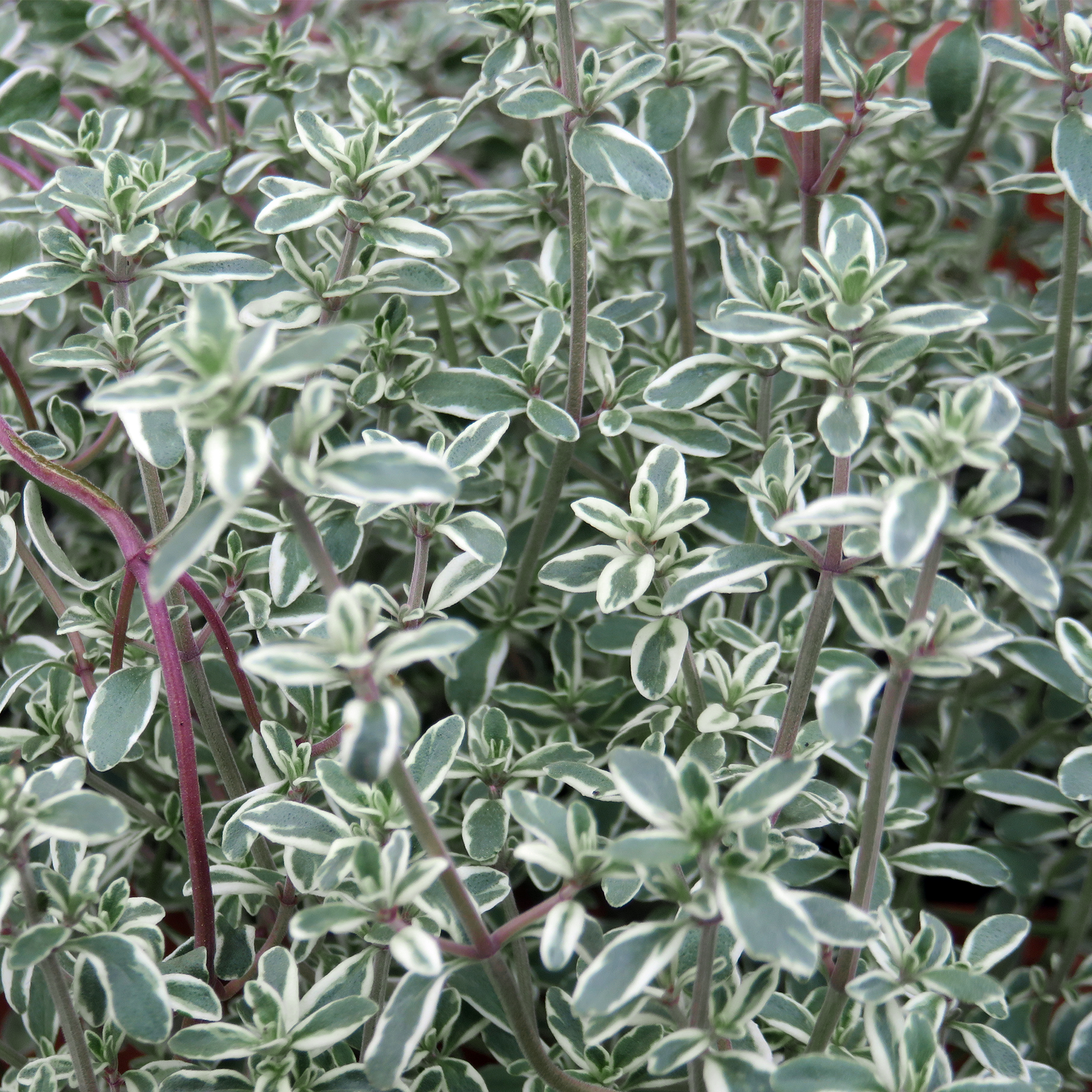
Silver thyme
Silver thyme is a highly ornamental perennial herb, prized for its small green leaves edged with silvery-white, which brings a lot of brightness to herb gardens, rockeries, edible borders, and patio containers. Its fragrance is reminiscent of classic thyme, with a warm, herbaceous, and slightly peppery flavor, perfect for seasoning grilled meats, poultry, fish, roasted vegetables, potatoes, sauces, soups, marinades, and stews. Its variegated foliage creates a beautiful contrast with dark green herbs, purple foliage, and full-sun plants.
Easy to cultivate, silver thyme prefers a full sun, warm, and well-ventilated location, in light, poor to moderately fertile, and very well-drained soil. It tolerates dry conditions very well once established but does not tolerate excessive water and heavy soils. Whether in pots or in the ground, regular harvesting of young stems helps maintain a compact, dense, and well-branched plant. Its low growth also allows it to be used as a border, in a rockery, or in small spaces where one wishes to add a useful and ornamental herb.
Both aromatic, bright, and easy to care for, silver thyme is ideal for gardeners looking for a flavorful plant with great decorative value. Its delicate flowers attract bees and other pollinators, adding biodiversity to sunny arrangements. It is an excellent choice for creating a gourmet, fragrant, and elegant garden, both in containers and in the ground.
Care guide
Choosing this plant
Light, soil, water and hardiness
Blooming, foliage and shape
Size and growth
Companion planting, spacing and harvest

Pets

Butterflies

Repellent

Deer
The availability of our plants varies depending on arrivals, seasons, nursery production and supplier availability. Some varieties may be offered for a limited time only, depending on their natural cycle or current stock. These plant profiles are designed to guide and inspire you when choosing plants for the garden, landscaping projects, containers or long-lasting outdoor arrangements.


